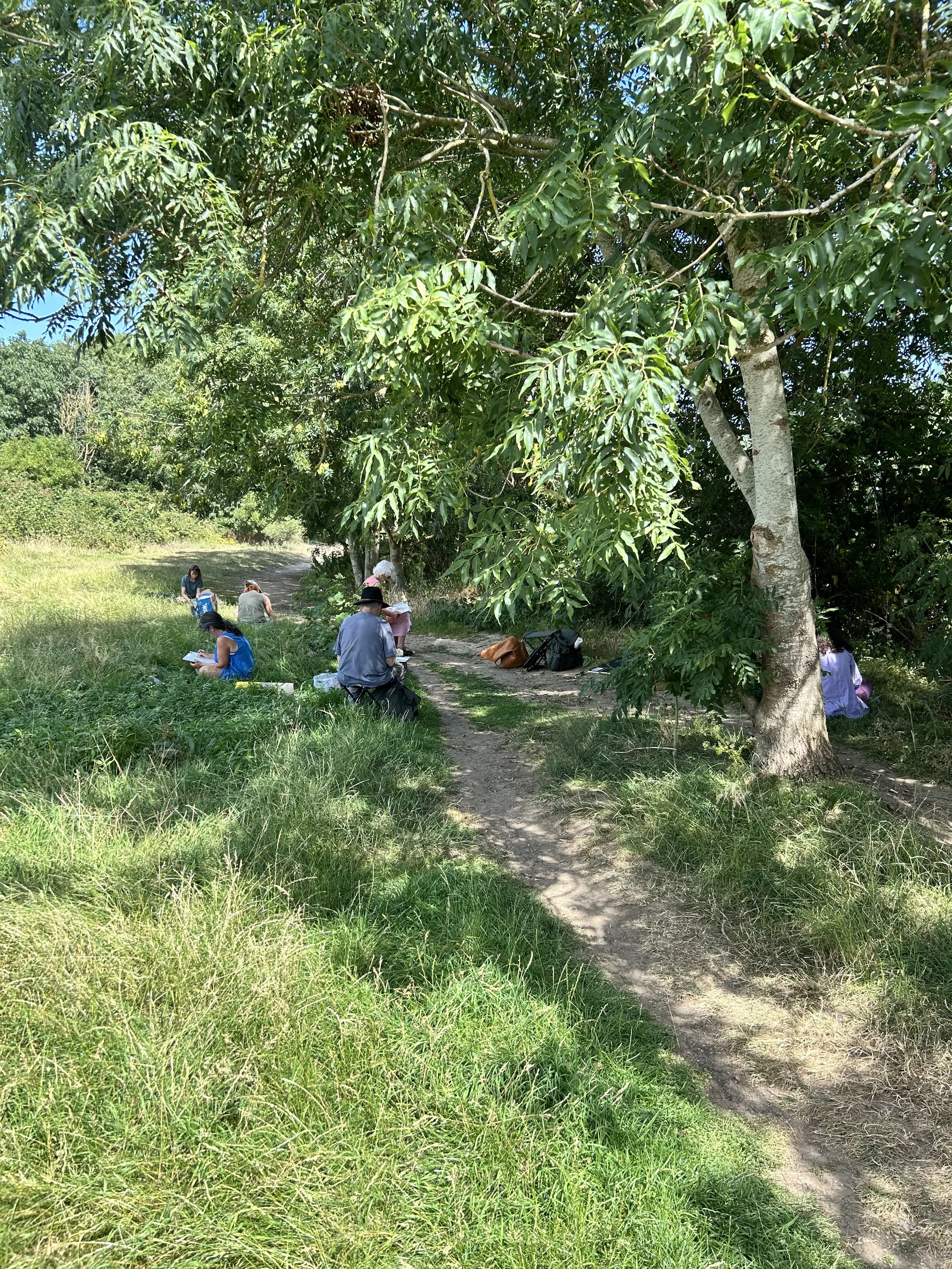
On July 5th I led the second free experimental drawing workshop on Burgess. It was a very hot day but there was a bit of shade.
These two hour workshops are very relaxed but challenge preconceptions about drawing. They also enable those with less confidence in their ability to relax into experimentation without pressure to produce a glossy final product. We limit numbers to eight. The workshops are not designed for children and we would prefer not to entertain dogs on these occasions.
We are thinking of organising a further workshop in the autumn when the landscape has begun to change. This would probably be in October. If you’re interested in coming along please email me at imo.rigden@icloud.com and I’ll confirm the date when I can and send joining instructions with a list of materials to bring. The workshops are free and spare materials are usually available.
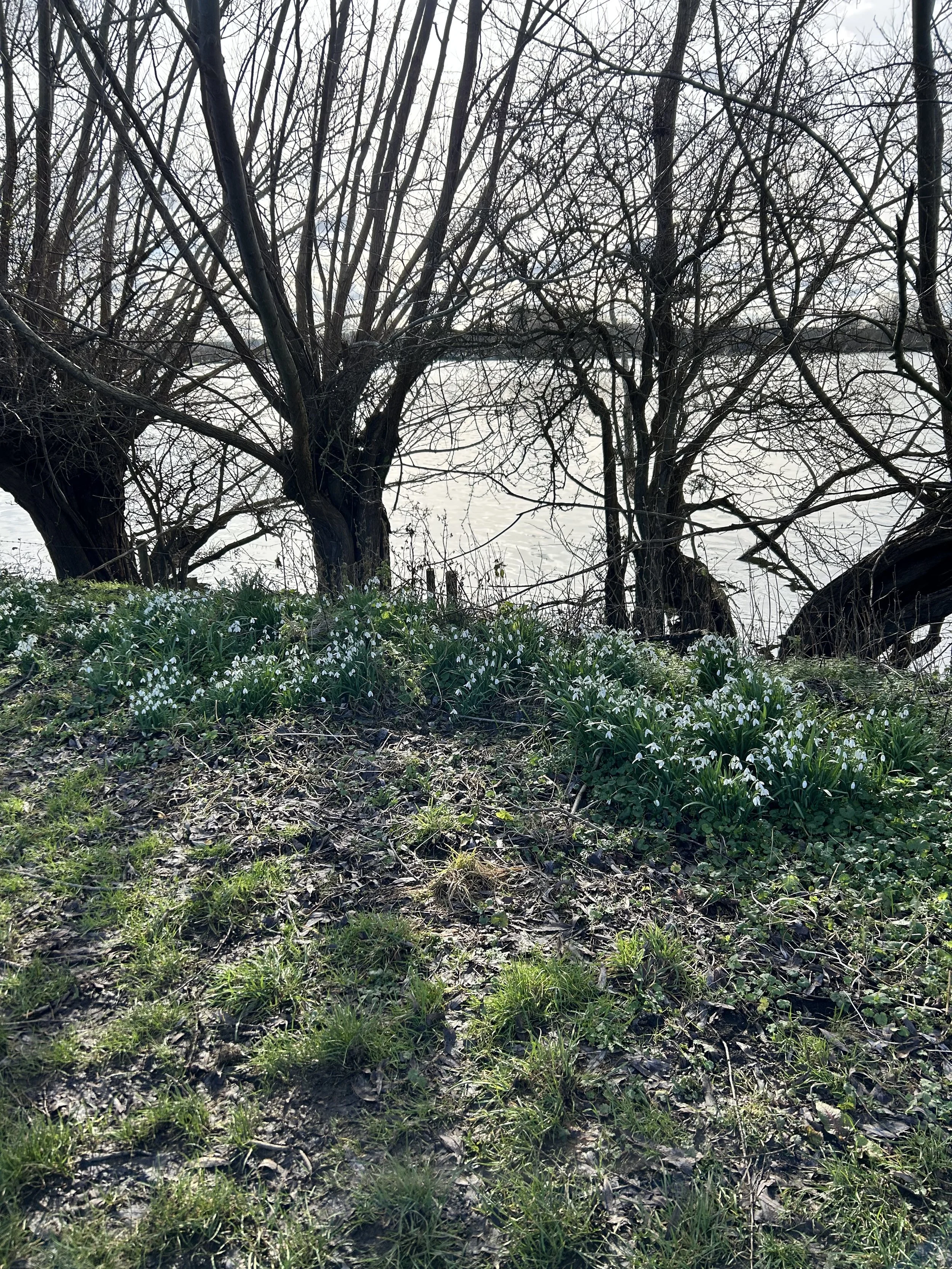
After a seemingly interminable stretch of grey skies and rain, we managed to ford the flooded path beyond Aristotle Lane and Trap Grounds Allotments to walk on Burgess Field.
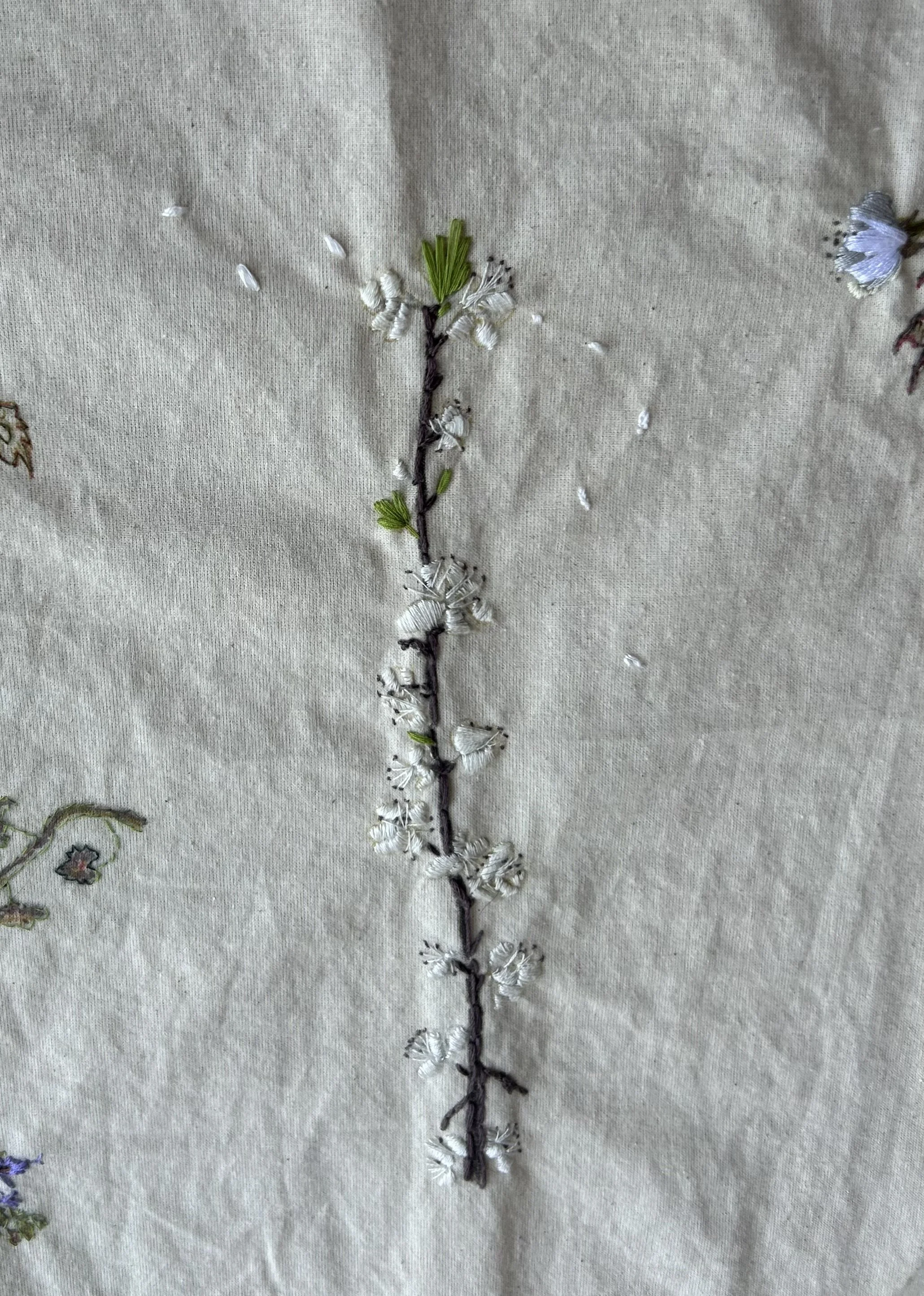
There were very early signs of blossom on the blackthorn bushes next to the railway track. The first embroidered blossom on my Burgess Field textile piece is the Blackthorn. I placed it alongside the Wild Cherry - a wonderful example of which is now in bud at the main south gate of the Burgess reserve. It will soon be the time of year when the various blossoms come in many different kinds of white, like a Farrow and Ball catalogue. That’s a big challenge if you’re wanting to embroider them.
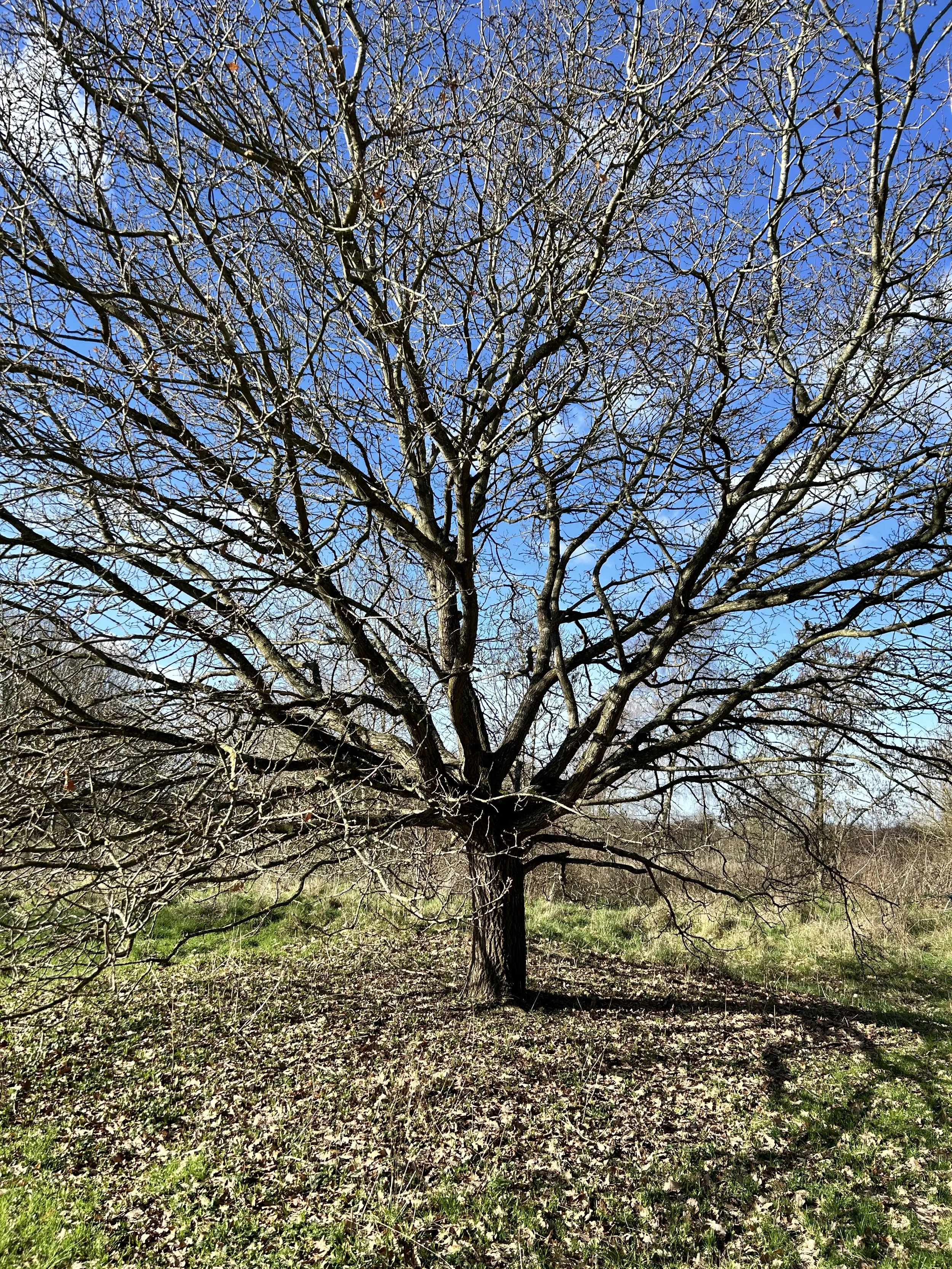
We passed the Perfect Little Oak, named for its classic shape and small stature. The birds we heard at that stage were the jays, known for their close relationship with oaks whose acorns they usefully disperse each autumn.
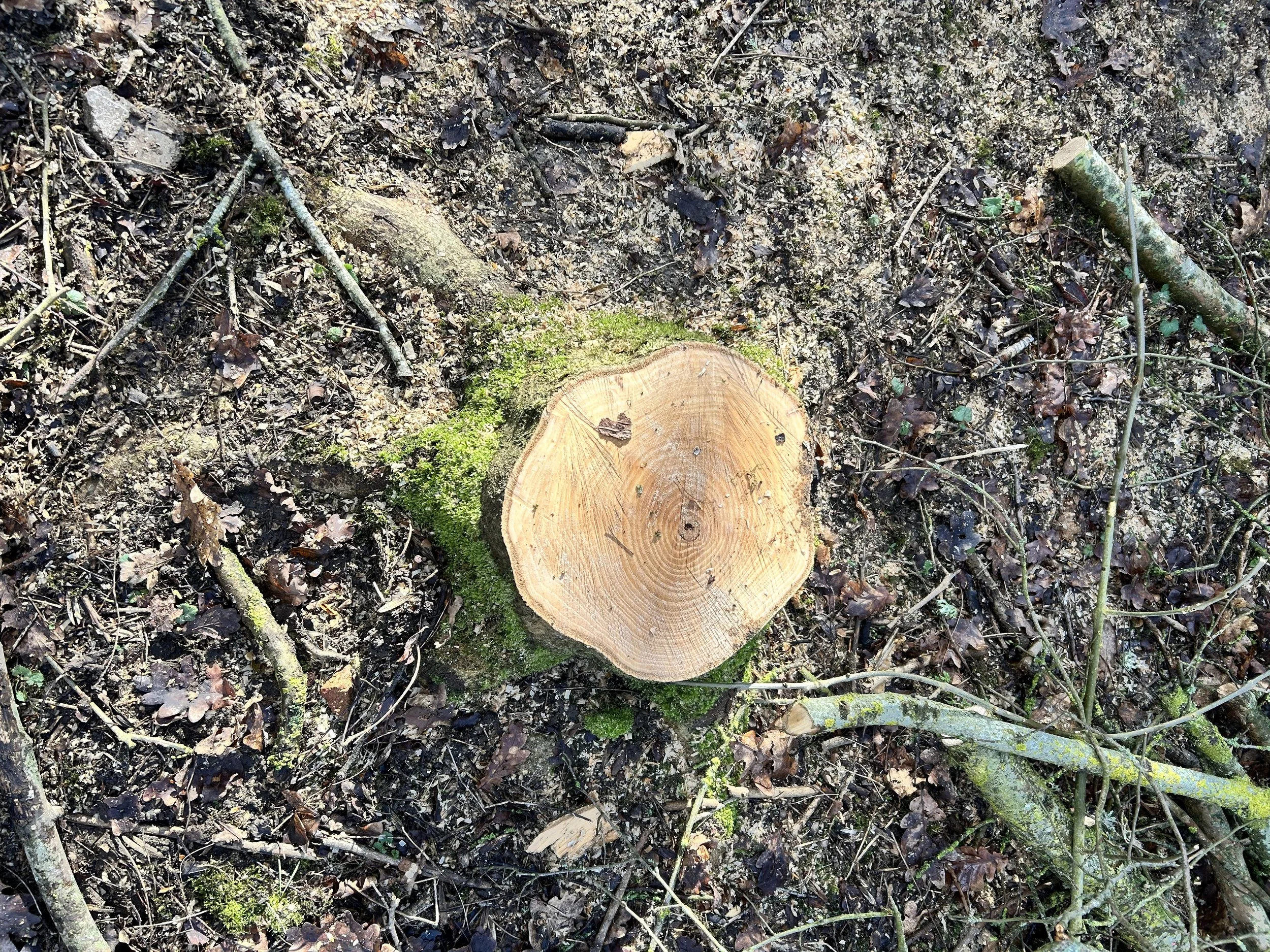
Perhaps the biggest change since I was last on Burgess was at the Northern end, where trees have been felled, opening up the canopy and allowing light to reach the plants on the ground.
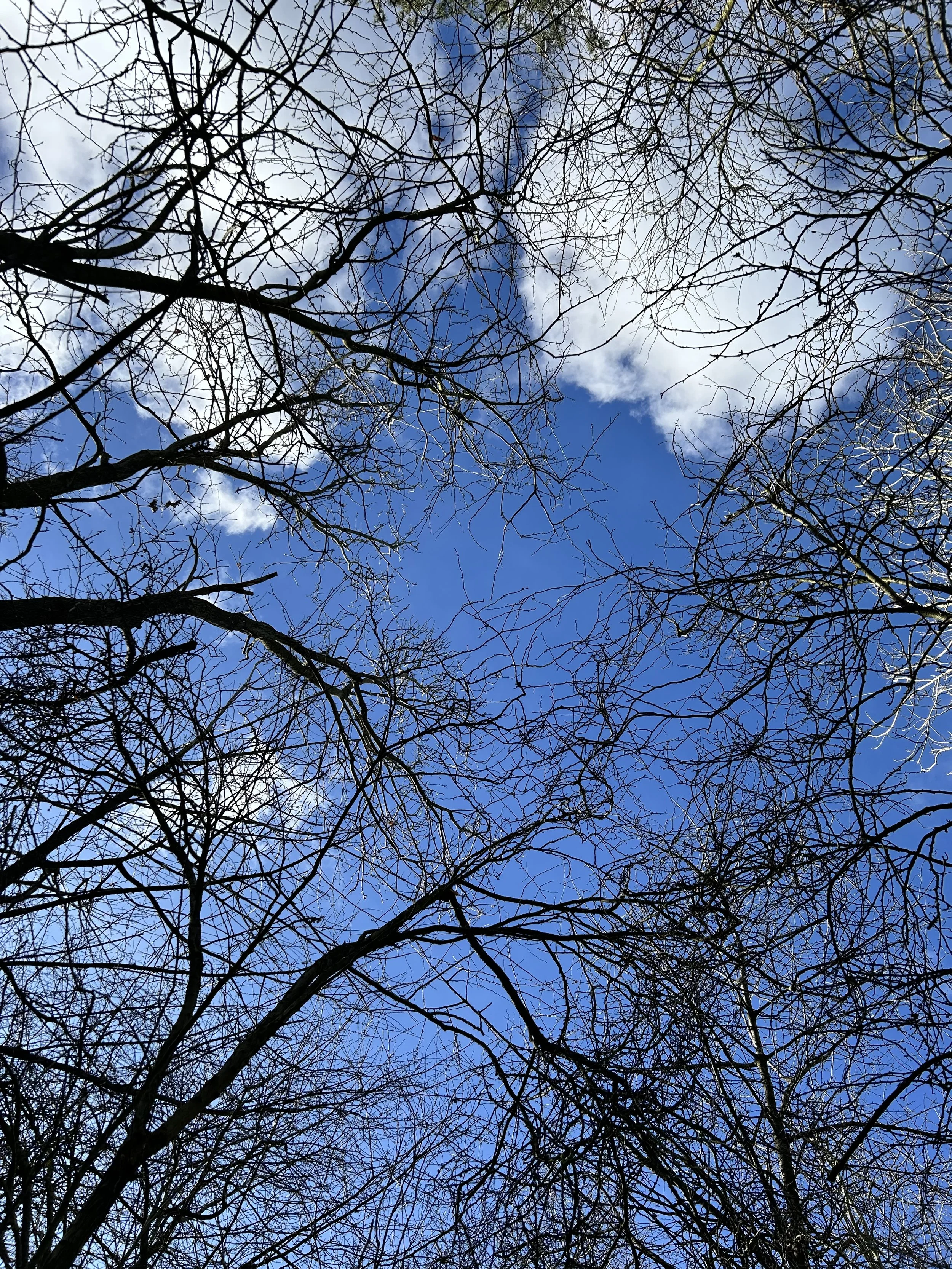
I stood on a stump and looked up to the sky to see a new gap. It’s always a bit gut-wrenching to witness trees felled but Burgess is a reserve which has a very important relationship with the people who are working to improve it. The absence of heavy footed animals (other than the very occasional ingress of cows from the Meadow) means that humans must intervene in order to create good habitat and healthy plants.
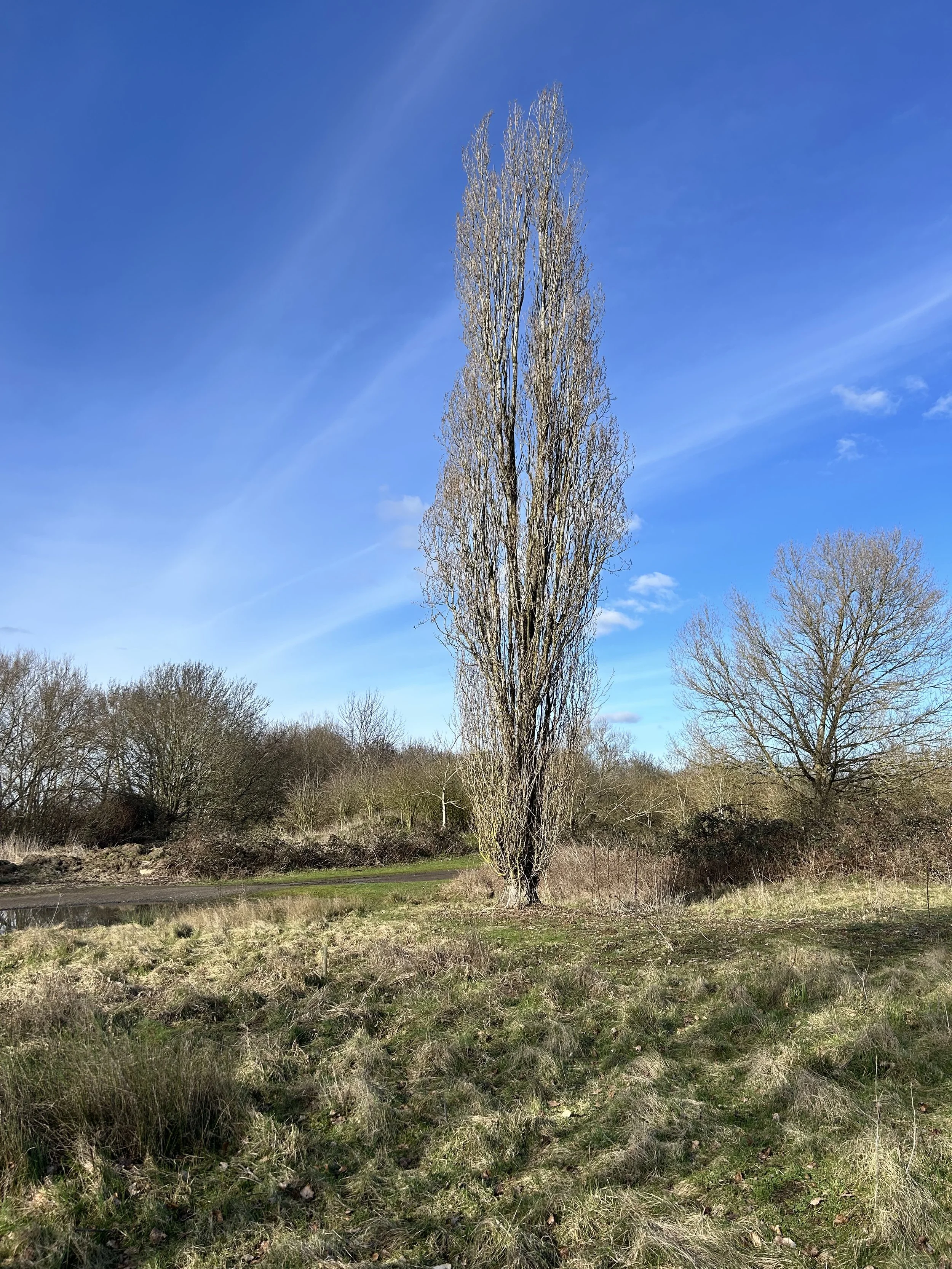
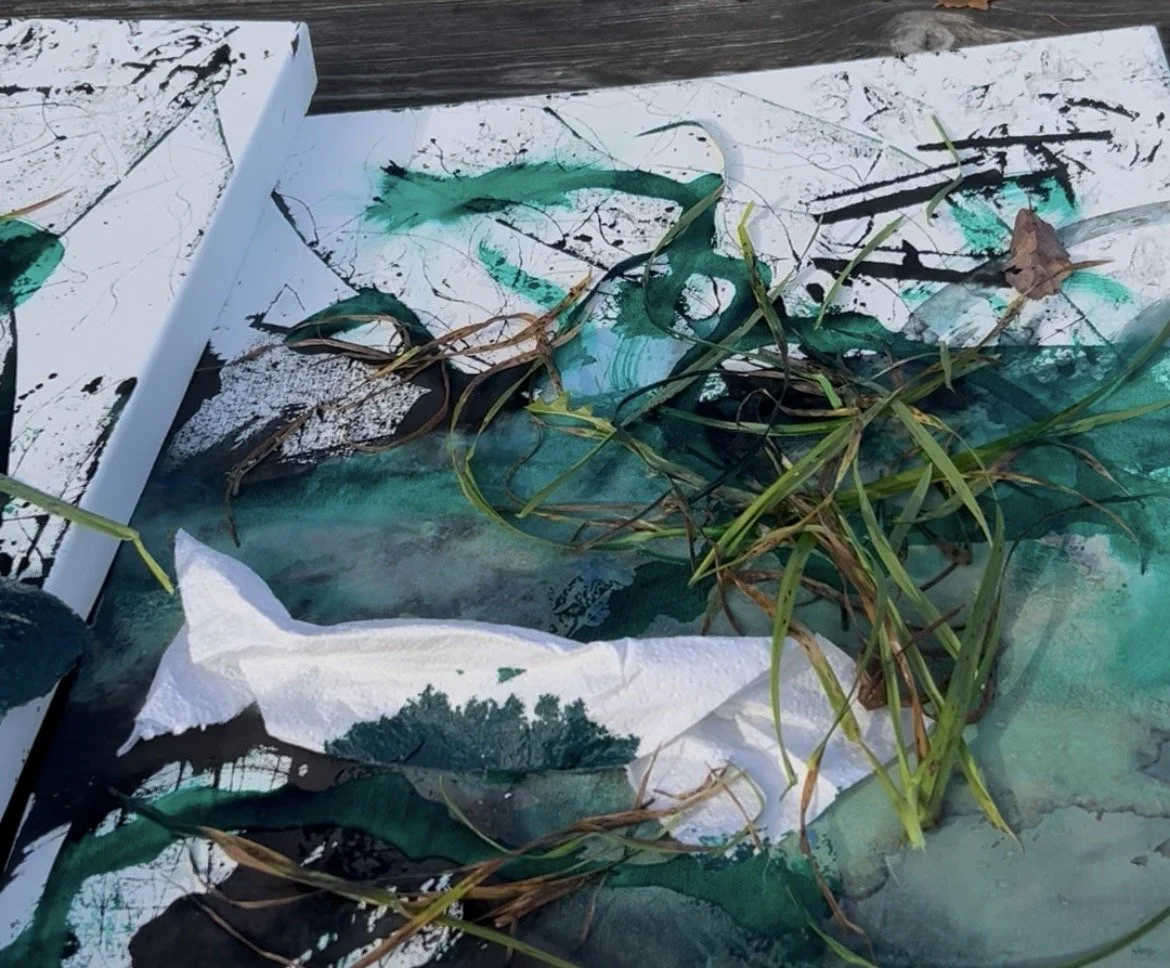
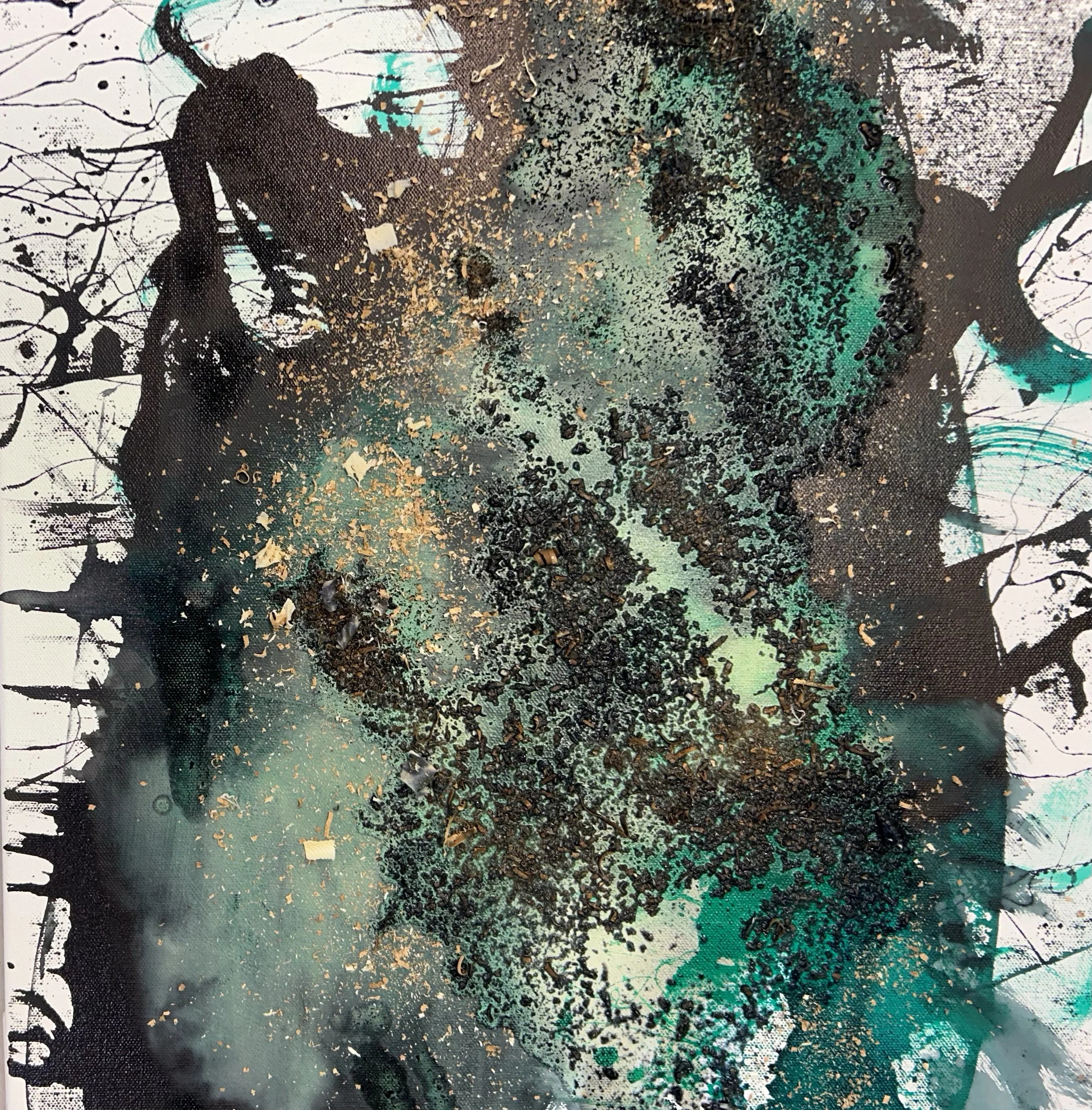
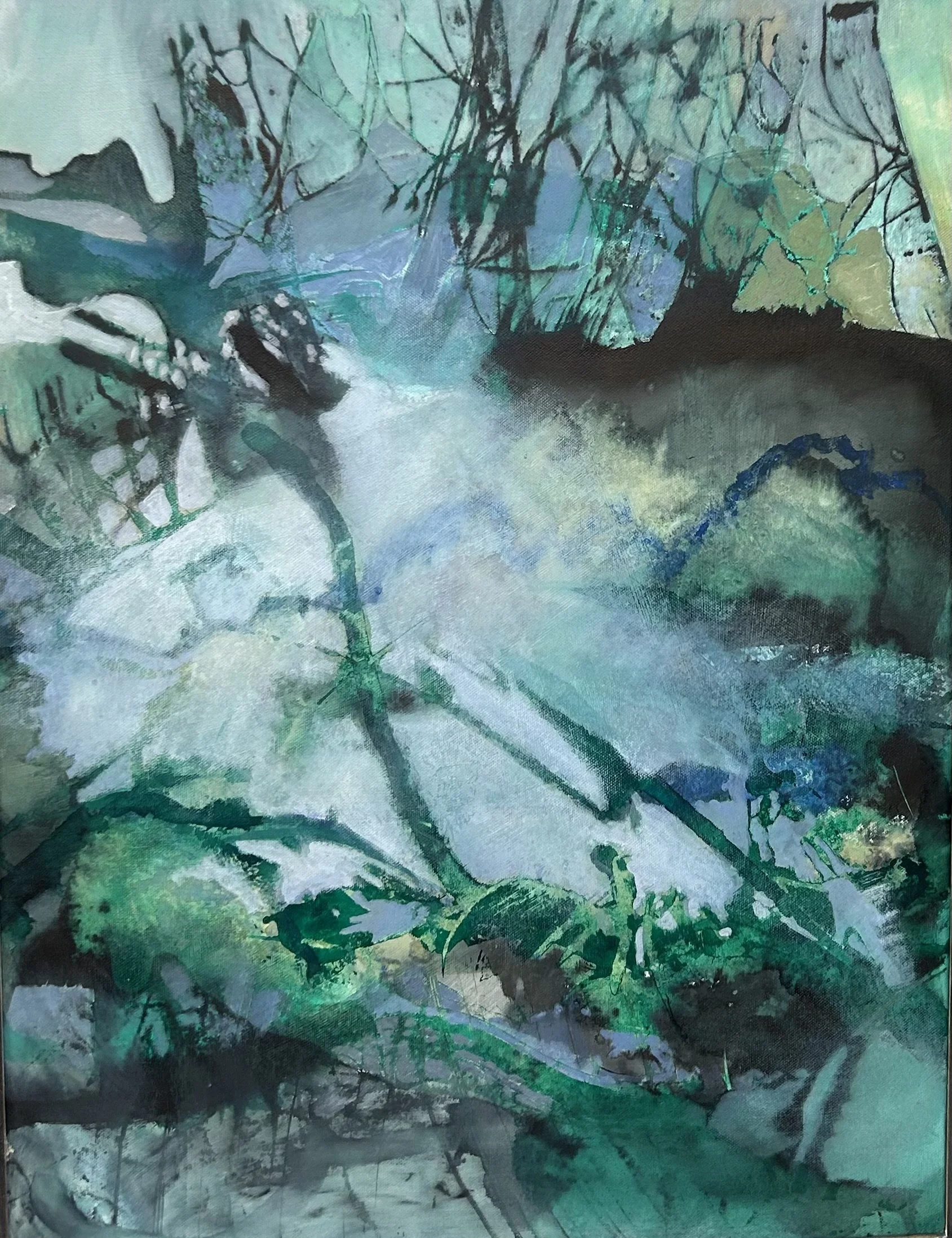
We checked on the young poplars at what we now call Lombardy point and then passed the flooded Meadow with its whistling wigeon and other chattering and displaying water birds. Beside the photo of the flooded Meadow is my latest abstract interpretation of the recent wet conditions.
To make this I began by messing up the white gessoed canvas using inks, grass and sawdust. After a while I removed the debris from the surface and then painted in layers over the next few weeks. The painting does its own wild thing for a while and then I intervene. The outcome is unpredictable but sometimes successful.
Here’s to spring!
Blog update 15.2.26
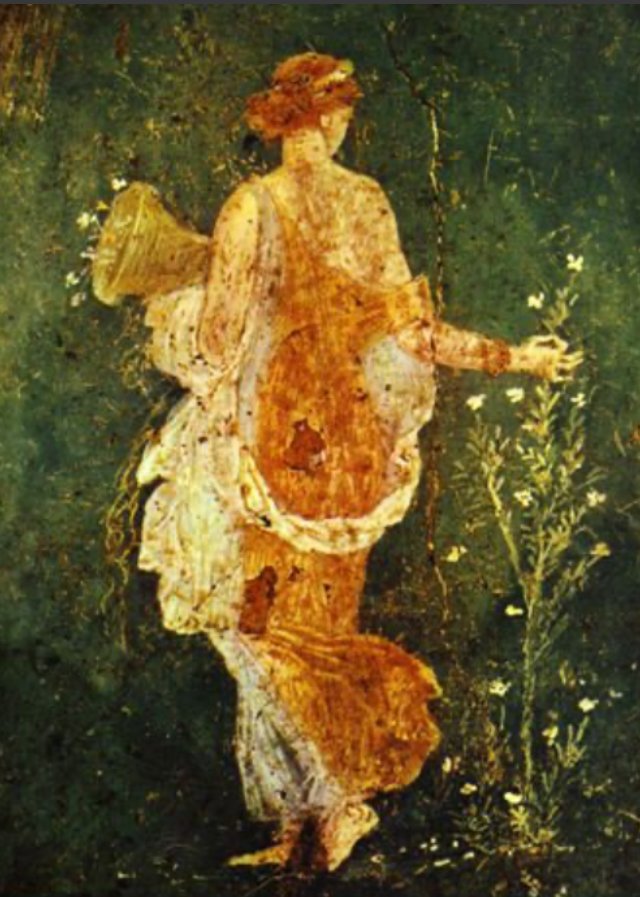
Our ancient mythology tells us that on February 1st each year the Celtic goddess Brigid takes over from the harsh old woman of winter, the Cailleach. The light returns and the plants begin their growing season. I’m particularly fond of this image from Pompeii of Flora, another goddess of fertility and growth in the natural world.
After a slow beginning and a lot of wet and cold, you catch sight of the first aconites and snowdrops and from then on the plants and trees on Burgess Field join the race to bloom and thrive. The bird song mirrors this energy, beginning with the thrushes (alongside the robins which have been singing throughout), and soon the finches and warblers, perhaps a cuckoo and of course we dream of nightingales. Over the years I’ve been trying to capture the sound of birds in a sketchbook. These sketches are impressions of the song and this exercise compels the mind to focus on just that sound. It stays in your memory and does its magic.
I rarely sit and draw a landscape but often stop on a walk, make a few marks and a few notes. I work in a windowless studio so I must fill up my imagination, rather like a bee collecting pollen and take the store of information inside with me in order to paint. Photographs have limited use in my practice and I never refer to them when I paint.
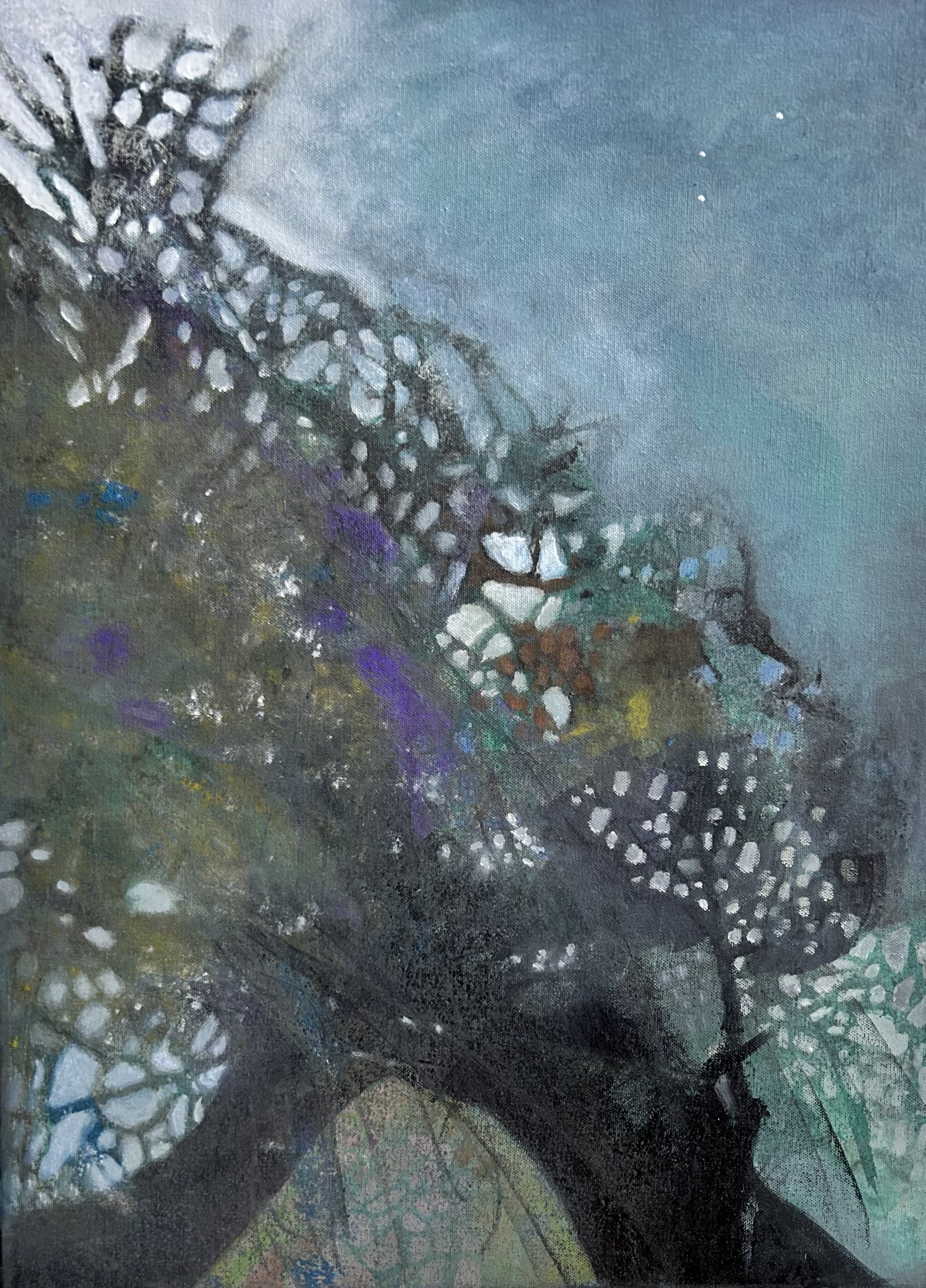
The second image is of a recent painting which derives from walks and observations on Burgess Field. The hawthorn trees are a treat, winter and summer. This is an image of two of them entangled on a winter’s night under the stars, waiting for Spring.
Blog update January 2026
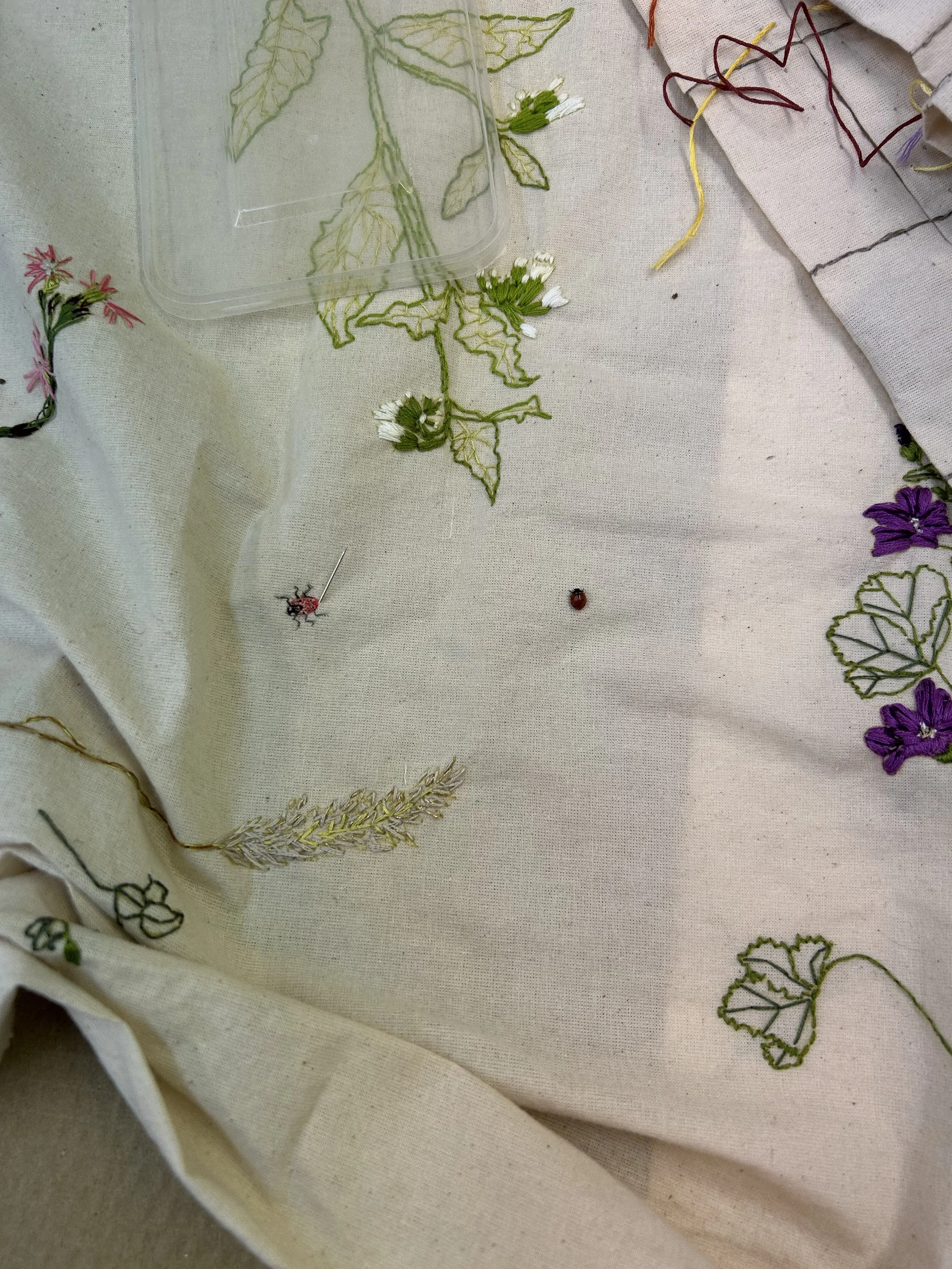
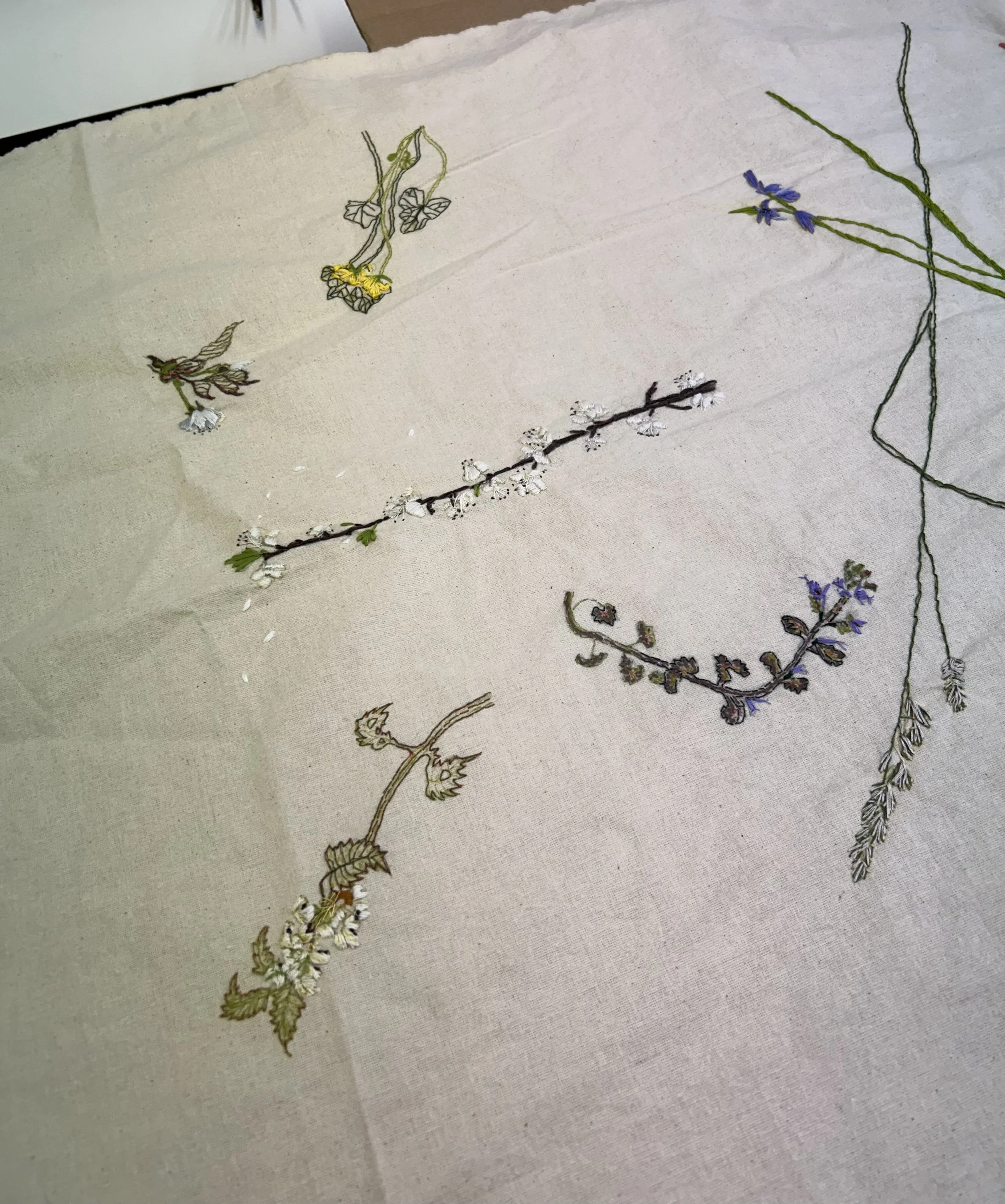
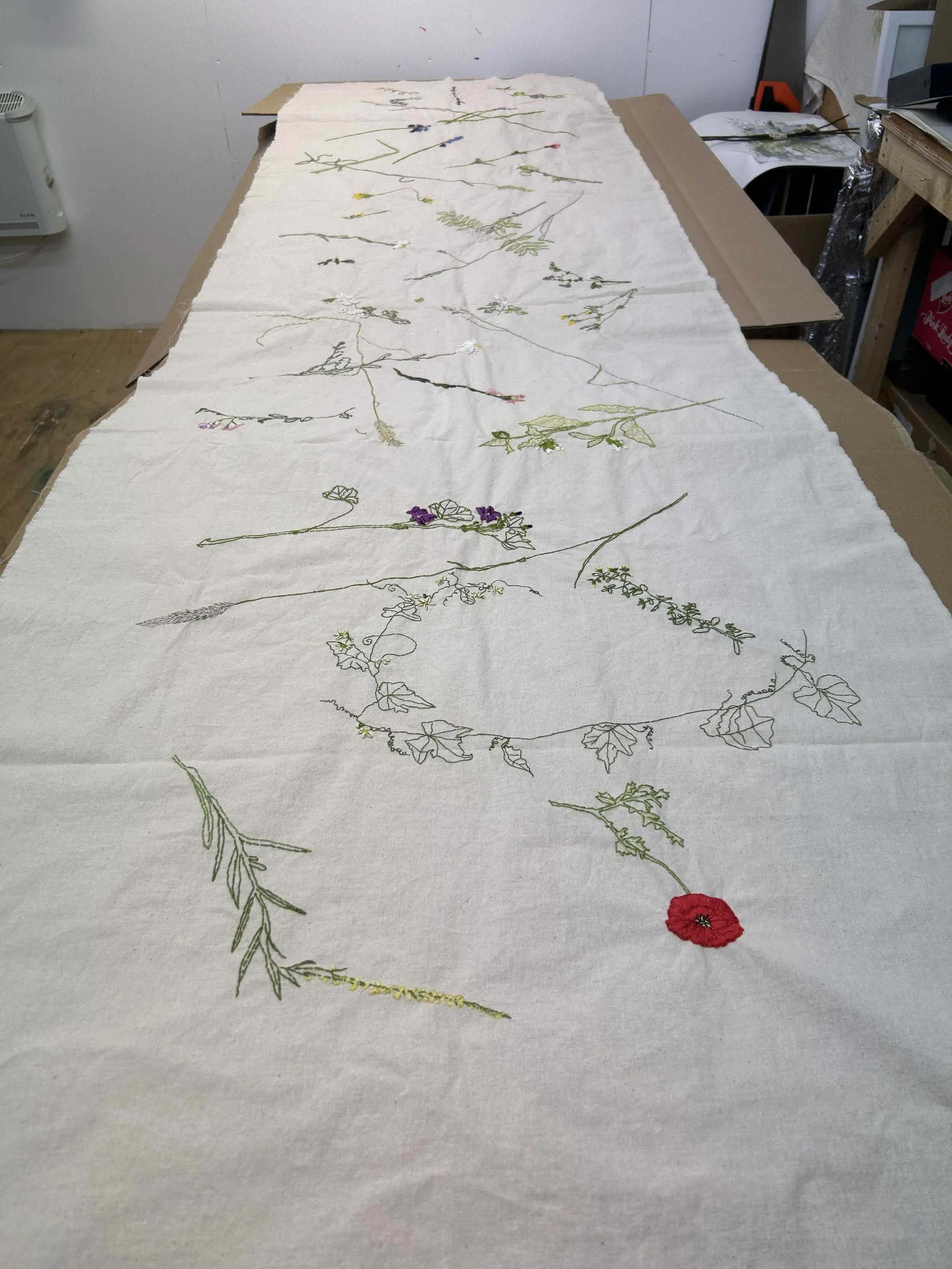
At the end of September 2025 I completed the first stage of a textile piece which records some of the flowers blooming on Burgess Field from March (Blackthorn) to June (Field Poppy). I’m now adding marks which represent the birdsong heard on Burgess in that period of the year.
I draw in cottons and embroidery silks on undyed calico and the length will be padded and backed in calico and suspended from a baton to become a wall hanging. It will be shown in October 2027 in the North Wall Gallery, Summertown, Oxford. A truly slow-burn project.
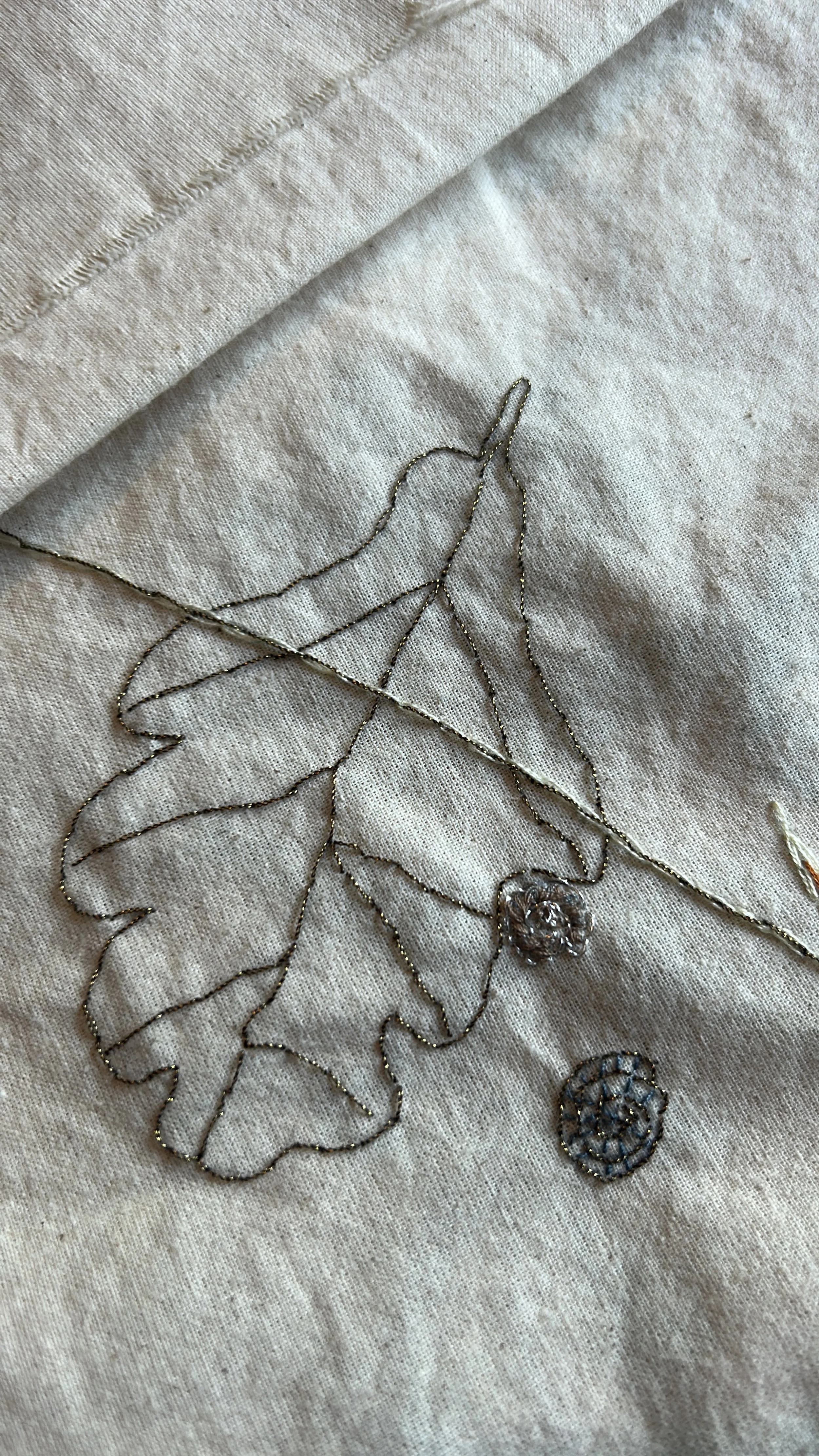
Whenever I visit the reserve I hear and see jays. They often bury acorns and a spread of oak trees might result if conditions allow.
I’ve therefore scattered a few oak leaf shapes across the piece and added some small creatures … snails, a ladybird and my favourite butterfly, The Speckled Wood.
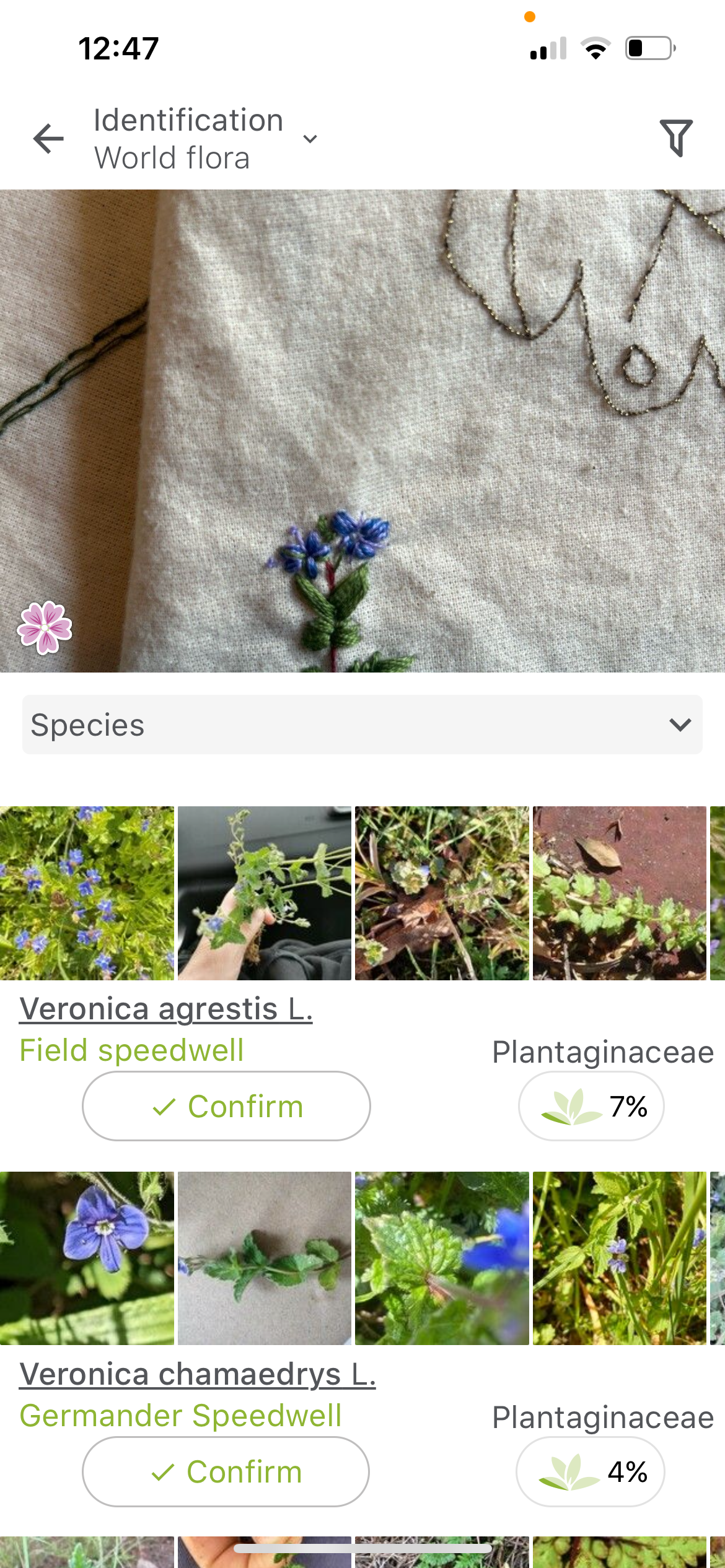
I’m finding it funny that many of the sewn flowers can be identified on the plant app on my phone.
Blog updated October 4th, 2025

I’m taking on the very relaxed and informal role of artist in residence at Burgess Field Nature Reserve, Oxford. Please follow this link to learn about the history of the reserve and the ongoing work by the Friends of Burgess Field. It’s a story of joyful hope in an otherwise sad era for our natural world and I’m extremely pleased to be able to work here.
https://www.friendsofburgessfield.co.uk
I have very little idea - or perhaps far too many ideas of what I might do but the first part of the residency is going to entail the naming of areas on the site. There are a few names already on the Friends’ website map such as Snipe Field. I would like to gather others, even if there are several for the same area. If you have given your own name to a spot that you know and love on the reserve, please email it to me and, with your permission, I will use it in my work. imo.rigden@icloud.com
This residency will culminate in a group show at The North Wall gallery, Oxford in the autumn of 2027. We have plenty of time….
Say hello if you see me on site!
Blog begun March 2025